Glossary
Model coverage
Skipping regional stacks (e.g., YandexGPT, GigaChat) underestimates real buyer journeys.
Coverage interacts directly with GPI™ and Share of Voice.
Definition
Model coverage is the explicit set of large language models and assistants your monitoring run queries—global vendors, open-weight stacks, and regional players. Incomplete coverage creates false negatives: a brand can look "fine" in ChatGPT while disappearing in Alice or GigaChat. Coverage is a product choice, not a vanity stat.
Practical gap example
A team reported strong growth from 3 models. After adding regional stacks:
| Set | Avg score |
|---|---|
| Western-only (3 models) | 58 |
| Full market set (8 models) | 44 |
Mini chart:
3-model view  58  ▇▇▇▇▇▇▇▇▇
8-model view  44  ▇▇▇▇▇▇
Conclusion: prior KPI was optimistic due to missing coverage.
How it's computed
Each check declares which endpoints fired successfully. Reports show per-model blocks so you can see dropouts or timeouts. When a model is offline or rate-limited, the run records the gap so you do not mistake missing data for zero mentions.
Coverage completeness math
Coverage completeness = successful model runs / planned model runs
Example: 7 / 8 = 87.5%
Anything below 90% should be flagged in executive reporting.
How it works in practice
Coverage design by market
| Revenue footprint | Minimum model mix |
|---|---|
| US + EU only | ChatGPT, Gemini, Claude, Perplexity |
| CIS heavy | add YandexGPT, GigaChat, Alice |
| Global multilingual | include regional open-source derivatives |
Coverage is a business decision: follow where buyers ask questions.
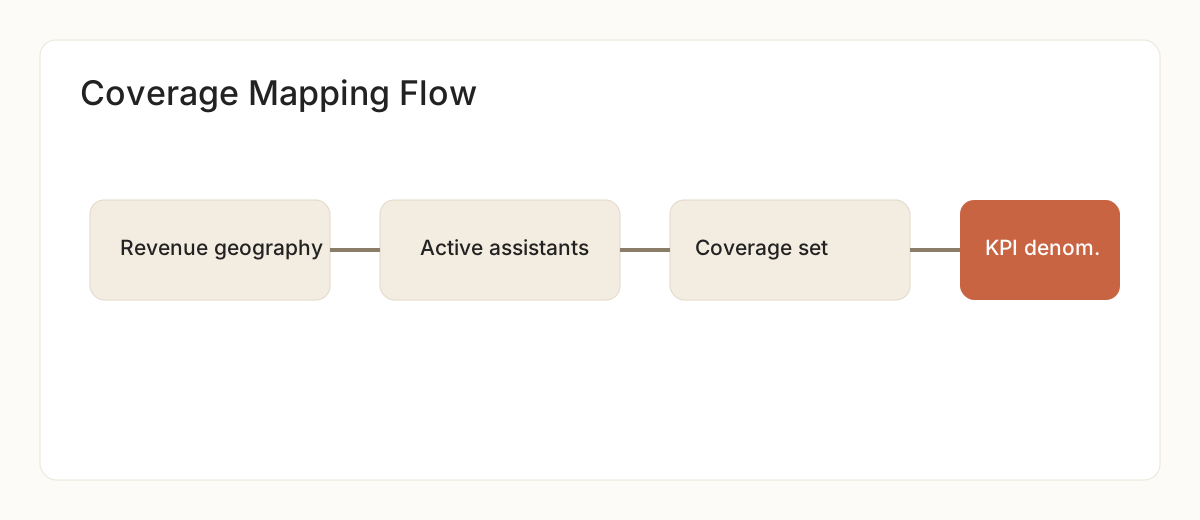
Coverage map:
How to read it
Expand coverage when revenue crosses regions or when a new assistant gains share in your niche. Shrink only if a model is irrelevant to your buyers—document the rationale so KPIs stay honest.
Coverage rollout plan
- Map your top 3 revenue regions.
- Map top assistants used in each region.
- Define baseline coverage list and fallback list.
- Track completion rate every run.
- Document why each model is in or out.
- Revisit the list quarterly based on buyer-channel shifts.
Coverage quality bands
| Indicator | Weak | Healthy |
|---|---|---|
| Model completion rate | <85% | 95%+ |
| Regional representativeness | One region only | Mirrors revenue map |
| KPI reliability | Frequent denominator drift | Stable denominator for quarter |
If denominator changes every week, trend charts lose decision value.
Document model additions/removals in the report footer so leadership can distinguish market movement from methodology updates.
When to use
- Procurement comparing Getllmspy to Western-only tools.
- CIS go-to-market checks.
- Quarterly roadmap reviews with engineering.